

Quick answer
Sapporo sumo wrestling demonstrations take place at the Sapporo Sumo Club in Susukino, where retired professional rikishi perform live matches and explain tournament rules, ring ceremonies, and training discipline. Sessions run daily from 11:30 to 14:30 and include a traditional chanko-nabe lunch served family-style. Advance booking is required; no walk-in gate fee exists, as access is structured around reservation-only show-and-meal packages.
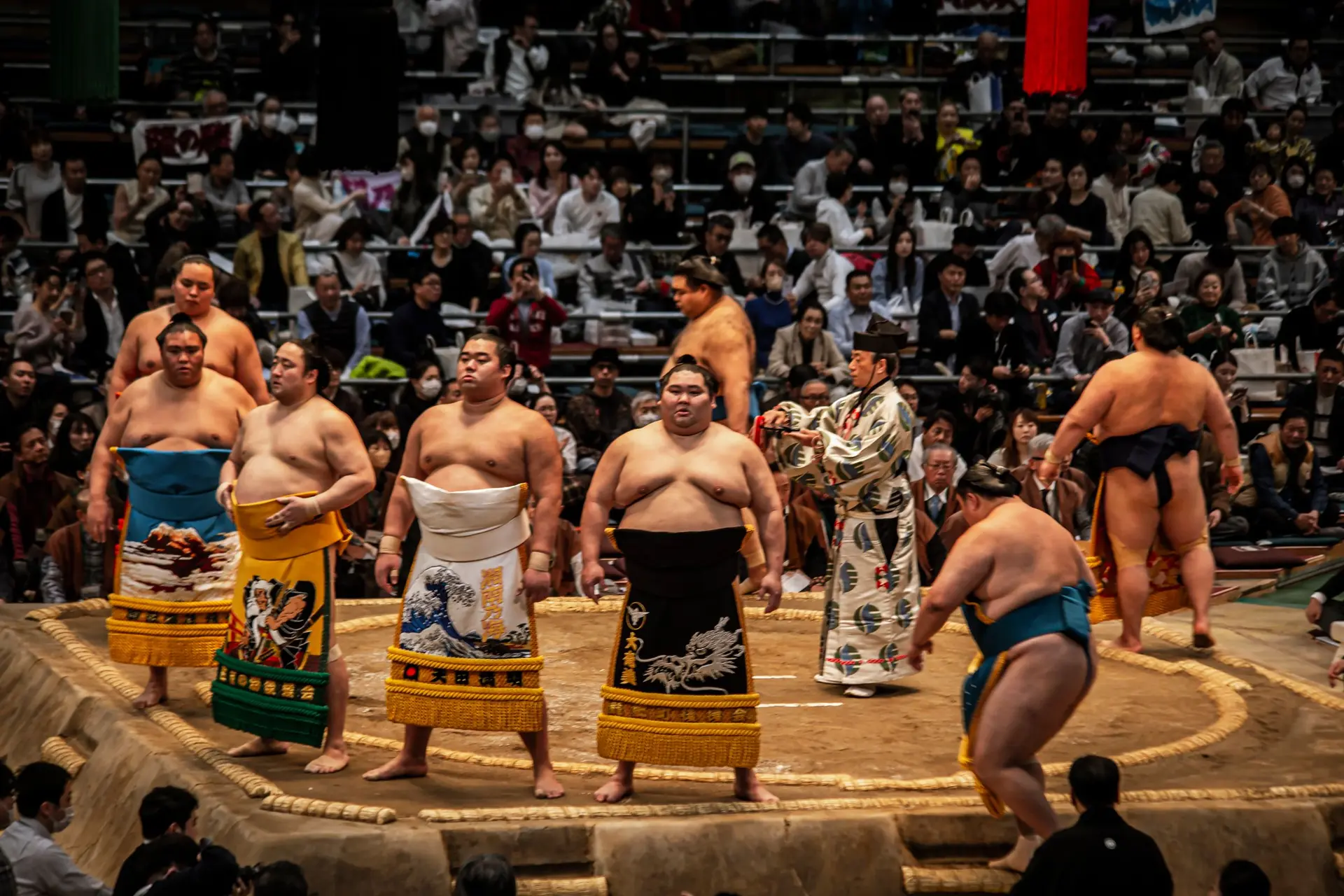
The clay ring used in sumo—called a dohyo—is remade before major tournaments using sacred Shinto rituals that date to the Edo period. In Sapporo, the tradition takes an educational turn: retired wrestlers who once competed in Tokyo's grand tournaments now teach visitors the sport's intricate etiquette and explosive technique in a setting designed for questions, not silence. Sapporo sumo wrestling sessions open with salt purification and foot-stomping shiko exercises that drive evil spirits from the ring. Wrestlers then demonstrate kimarite—the eighty-two winning techniques recognized by the Japan Sumo Association—and explain how a match is decided not by pins or submissions but by forcing an opponent out of the circle or making any part of his body other than the soles of his feet touch the ground. The action is faster than newcomers expect: bouts average fifteen seconds, though strategy and psychology unfold during the pre-match stare-down and the referee's ceremonial fan signals. After the demonstration, participants sit with the rikishi for chanko-nabe, a one-pot dish of chicken or pork simmered with vegetables, tofu, and dashi broth. Wrestlers consume the stew in enormous quantities during training to build mass; the Sapporo club serves a more moderate portion alongside rice and pickles, with explanations of how diet shapes a sumo career. Conversations range from tournament stories to the hierarchical stable system that governs a wrestler's daily life from teenage apprenticeship to retirement. The Sapporo venue operates in Susukino, Hokkaido's entertainment district, a short walk from the subway. Its small scale—audiences rarely exceed twenty—means demonstrations feel more like master classes than performances. Former wrestlers answer questions in Japanese and English, and the club's intimate format allows visitors to handle practice mawashi belts and photograph the dohyo up close, access unavailable at Tokyo's six annual honbasho tournaments where spectators sit in distant balconies and silence is enforced.
“The dohyo is remade before major tournaments using sacred Shinto rituals that date to the Edo period.”
Operating Hours for Sapporo Sumo Wrestling Experiences
The Sapporo Sumo Club operates on a consistent schedule throughout the week. Access to the venue requires coordination through the official booking portal prior to your visit.
| Monday | 11:30–14:30 | |
|---|---|---|
| Tuesday | 11:30–14:30 | |
| Wednesday | 11:30–14:30 | |
| Thursday | 11:30–14:30 | |
| Friday | 11:30–14:30 | |
| Saturday | 11:30–14:30 | |
| Sunday | 11:30–14:30 |
The Evolution of Sumo Traditions and Sapporo Sumo Wrestling
Sumo wrestling traces its origins to the eighth century, when ritual bouts were performed at Shinto shrines to petition for bountiful harvests. By the Edo period (1603–1868), professional tournaments had taken root in Edo, Osaka, and Kyoto, codifying the rank system and ceremonial protocols that define the sport today. Wrestlers lived in communal training stables, adhering to strict hierarchies and daily routines that shaped both physique and discipline. The Meiji Restoration in 1868 threatened sumo's survival as Western sports gained favor, yet imperial patronage and the establishment of the Japan Sumo Association in 1925 secured its status as a living cultural treasure. Hokkaido's relationship with sumo deepened in the twentieth century as the island's population grew and urban centers like Sapporo emerged. The region produced notable wrestlers who rose through the professional ranks, bringing northern pride to the national stage. Sapporo sumo wrestling venues began hosting exhibition matches and retirement ceremonies, offering audiences a chance to witness the sport's pageantry outside the six annual honbasho tournaments held in Tokyo, Osaka, Nagoya, and Fukuoka. These events preserved the ceremonial elements—salt purification, ring-entering rituals, and the gyoji referee's fan signals—while adapting to smaller, more intimate settings. Today, visitors to Sapporo can observe sumo traditions through demonstration events that pair live wrestling with explanations of technique and culture. The Sapporo Sumo Club in Susukino operates as a bridge between heritage and hospitality, presenting ring ceremonies, practice drills, and competitive bouts in a format designed for international guests. Wrestlers perform the dohyo-iri entrance ritual in ceremonial aprons, demonstrating stances and throws that have remained unchanged for centuries. The clay ring, rebuilt for each event, and the Shinto roof suspended above it replicate the sacred architecture of professional sumo halls, ensuring that the historical essence of sapporo sumo wrestling endures in a modern context.
Ritual sumo bouts performed at Shinto shrines to ensure agricultural prosperity and divine favor.
Professional tournaments emerge in Edo, Osaka, and Kyoto during the Edo period, formalizing ranks and ceremonial rules.
The Japan Sumo Association is established, consolidating oversight of professional sumo and preserving its cultural traditions.
Hokkaido wrestlers gain prominence in national tournaments, raising the region's profile in sumo circles.
Sapporo hosts exhibition matches and retirement ceremonies, bringing sumo pageantry to northern audiences.
Demonstration venues in Sapporo begin pairing live wrestling with cultural education for international visitors.
The Sapporo Sumo Club in Susukino offers immersive sumo experiences, maintaining ceremonial integrity in a hospitality format.
Etiquette Rules for Sapporo Sumo Wrestling Demonstrations
Sumo demonstrations honor centuries-old rituals that demand quiet respect from spectators. Observing proper conduct preserves the sacred atmosphere of the ring and ensures an authentic experience for all guests.
Do
- Remain silent during bouts and ritual sequences
- Bow slightly when wrestlers enter the ring
- Keep your phone on silent mode
- Wait for designated photo moments announced by staff
- Stay seated during matches and ceremonies
- Applaud only after the referee signals the bout's conclusion
Don't
- Don't use flash photography during bouts or rituals
- Don't point your feet toward the dohyō ring
- Don't eat or drink during active demonstrations
- Don't touch the salt or sacred rope decorations
- Don't leave your seat until the session concludes
- Don't speak loudly or make distracting gestures during matches
Check availability
Frequently asked questions about sapporo sumo wrestling
Everything you need to know about sapporo sumo wrestling